Thursday, 13 March 2014

Dutch lesson no 1: Lekker-ishing and lekker-isms

Do you see any connection between the images bellow? If you are Dutch, the answer is easy :)


However complicated Dutch language might be, there's one mandatory word that you can apply to basically everything and that will make you sound really local. Isn't that lekker?

Originally it was used to describe tasty food, the equivalent of delicious in English. But it has gone waaaay beyond that, and it can be used when talking about nice wether (lekker weer), a pleasant weekend (lekker weekend) or to the sexy guy/girl at the next table (He is soooo lekker (aka yummy)). But feel free to apply it to everything that is cool, great, nice, pleasant, good, enjoyable...


Friday, 7 March 2014

Crazy Stupid Love FUN


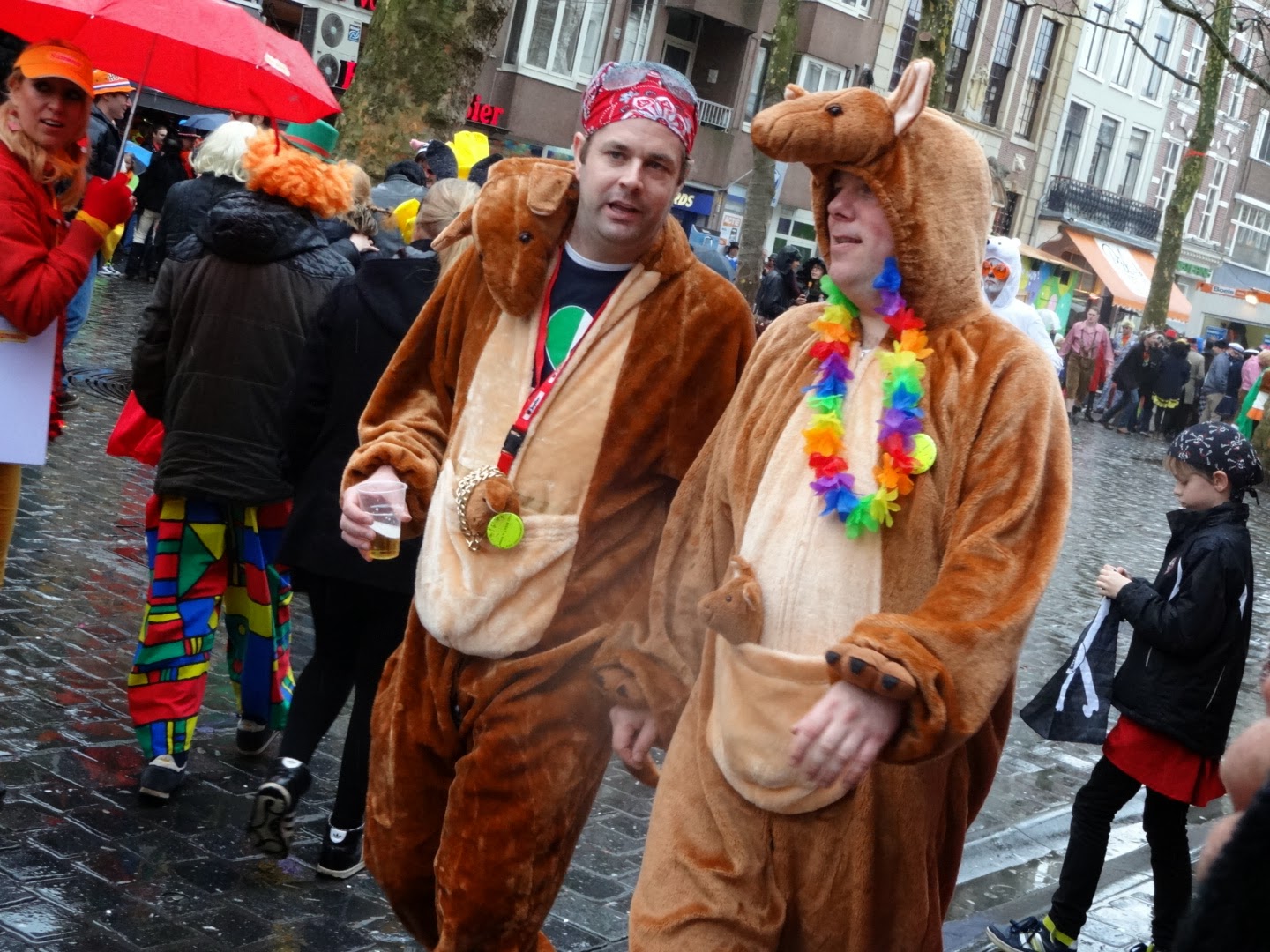
Also known as carnaval. Everything seems to go crazy, but everyone acts like it's the most normal thing in the world.

City's name is no longer Breda, but Kielegat, which is derived from Kiele, an old farmer's coat. Everyone gathers in the central market to see the ceremony during which Prince Carnaval (elected from the Carnaval Organizing Comitee) gets the key to the city, signifying the party can officially begin.


No one needs cars any more. Carnaval-ers have found new means of transportation.


Normal music no longer exists. It is replaced by silly sounding songs in Dutch, and the complicated Polonaise dance (human "train" made of people jumping around with their beer glasses). 

Water is replaced by beer. No one is allowed to drink anything else. Beer can also be used a shampoo, and its not impossible to witness a boy pouring a glass of beer in a girl's head. Moreover, it's completely normal that she looks angry for a few seconds, then squeezes her hair and puts it in a ponytail, while continuing to dance as nothing has happened (true story). 

You can be anyone. Or anything: a strawberry, an angel, a hippie, a funeral procession, a monk or a nun drinking next to the church, a dinosaur, a member of the DrinkedIn Comunity, a Tetris piece or even a hot dog.


Work does not exist anymore. Carnaval ends on Tuesday, but you usually need a few more days to recover after and get your body functioning on water and other fluids again. Also, no cleaning of the market is done until the disaster has officially ended.


Leaving jokes aside, carnaval is a great experience: people are having fun, the city becomes more colorful with the bars and pubs all building an outside attachment to sell beer easier and creativity blooms via the original costumes. But the greatest thing of all is that carnaval goes beyond age: teenagers, kids, mums & dads, grandmas and grandpas, people in wheel chairs and even dogs seem to enjoy it.


Sunday, 23 February 2014

Carnaval, partying for 3 days and 3 nights

Its only a week until the long expected Carnaval in the south of the Netherlands, here translated into 3 days of drinking beer, dressing in funny costumes, loud partying and ...did I mention drinking beer?

Everything becomes a party house during Carnaval
There are both lovers and haters of the Carnaval, one explanation resting in the fact that it is celebrated only in the Southern, Catholic part of the Netherlands, while Netherlanders from North of the rivers tend to disregard the carnaval as being a foolish and stupid party. However, no arrogant Northern Dutchie can distroy the enthusiam of the party people in the South, who take usally take days off from work (not to miss any part of their beloved festival).

Not to make it only about partying or beer, here's just a short history: Carnaval is celebrated all around Europe in most of the Catholic Countries, just before the Easter 40 day fasting begins. Actually, the name itsfelf, "carne" (meat), is an indication of this, as its one of the last days before Easter when people can eat meat.

In the Dutch South Lands (especially in North Brabant, where I live), some cities change its name during the carnaval and most of them have a "Carnaval Prince" and a motto. Although the official start of the carnaval is on Sunday (2nd of March this year) and it lasts until Tuesday, usually the party starts from Friday. Of course, they do not miss to through pre carnaval parties 3 weeks in advance, just to make sure the costumes fir well enough and to drink beer outside.


Building in Grote Markt decorated with flags and representations of Dyonisus

Carnaval fans tell me a good strategy is to have several costumes, as after one day of heavy partying and drinking, you kind of stink. And although you are never sober during the 3 (or more) days, its not a bad idea to change your clothes from time to time.

For an "outsider" like me, Carnaval is until now a good business for clothes shops (who display a large variety of costumes -- fairies, pirates, penguins,  bees, princesses, noble men or ladies, vikings, just pick your style!)and for the beer producers. But who know, maybe the Carnaval virus will also touch me :)


Monday, 10 February 2014

Small towns are boring beautiful

I used top live with the misconception that small towns are boring, but as I moved to one, I had to either accept the idea of a peaceful, unpredictable life or change my mind about them (I decided to do the latter :p). And actually, although I sometimes miss the energy and crazy rythm of a big city, I kind of like the familiarness of these cosy small towns, with their cute markets and canals.
What is actually really funny is that my favourite city until now in the Netherlands is not the crowded Amsterdam, glass & steel Rotterdam or highly industrialized Eindhoven, but the small Leiden.


The small cobbled streets, the noisy Saturnday market, the medieval fortress on the small hill (probably the highest point in Holland !? :p) are just adorable. And despite being one of the oldest cities, you can feel the young spirit of an universitary town.

But don't images speak lauder than words?


Thursday, 6 February 2014

About bread, bagels and beans

Dutch people love their bread, the reason they eat so much of it at lunch, as sandwiches ( typically around 5-6 slices of bread are involed in the sandwich making deal). Of course they can say they are effective people who need to have a quick, convenient meal (so that they can go back to work in no time and finish everything by 17:00-17:30), but still I think its more to the story than plain effectiveness. Otherwise why do they buy broodjies (small breads filled with cheese/meat/spinach/etc) for all the parties and you can find a panini toaster in every house?


5-6 slices of bread for lunch


I can't complain, as I like bread (is that the reason I now live in Breda?), this being probably one of the reasons I enjoyed the Bagels & Beans. This Dutch chain has delicious bagels (you can choose from plain, wholewheat, multi, grains, tomato, sesame or even cinnamon and raisins), with all sorts of filling (creamcheese, hoummous, tuna, ham, carpaccio, everything you might wish), lots of teas and big colorful coffee cups. Caffes are cosy and colorful, and atmosphere resembles Starbucks but I like it more due to the friendly stuff, delicious bagels and huge warm drinks cups. Not to say they have the Sweet Special, a yummy combination of Chocolate Brownies, cheesecake, cinnamon bagel with cream cheese and jam and muffins for all the sweet lovers. 


Big cappuccino cup
Sweet Special


The good thing is there's one in almost all big or medium cities in Holland, and there is also one in Breda (although I only tried one in Leiden and one in Amsterdam). Guess what is on my next weekend to do list?


Sunday, 2 February 2014

Windmills and Gin

I mostly got used to the Dutch weather in the 1 month and a half I have been here (though I still challenge the lack of fairness in the pattern of sunny weekdays are mostly  rainy/cloudy weekends), but one thing I still have trouble with is the wind. Mostly because you can never have a good hair day here (ladies will know what I am talking about), but also because it makes it feel colder than it actually is.

But Dutch are smart people, so if God gave them windy days all the time, they just built windmills (and drank Gin - you will understand the connection later on). This tiny country has more than 1000 windmills, and apparently, these had a major role in producing Dutch Gin (as they were use to grind grain, the main ingredient).

Although you can find a windmill in every city, the small city of Schiedam(5 minutes by train from Rotterdam) has the biggest windmills in the world, all spread around the city center canal. No gin this time, will definitely have to try that next time ;)


Tuesday, 28 January 2014

Dutch stairs, also known as house TRAPS

When I found the Dutch word for stairs is "TRAP", suddenly it all began to make sense. I could now understand why they are so steep and narrow, so they can act as house traps for visitors or thiefs -- at least this is my theory :))

Dutch house traps

I also come to the conclusion that Dutch try to fitt in as many staircases as possible in one house. While back home most of the 2-3 room apartments have no stairs, here they managed to fit 2 staircases in less than 60 square meters. I can sincerely undertand the staircare from the living and kitchen to the bedroom level, but why they needed to have the appartment entrance and an almost inexisting hall (seriously, it's like half square meter) on one level and then the living room on a different level is still a mistery.

Make the trap double
After intense studying of the issue, it seems that there is actually an explanation for this. In the past, people had to pay tax depending on the width of their house, so in order to avoid high charges they just build "tall" and narrow houses, connecting the levels by (what else than?) narrow stairs.

Now that I know the rational behind, I seem to enjoy my stairs more :) I realised I can exercise a lot without even leaving the house, who wouldn't want that? On top of it, I am becoming more effective, planing in advance the "trips" upstairs and "downstairs" and making sure I don't forget anything I have to take with me from one level to the other. But still, when it comes to suitcaises carrying up or down, I cannot help but wonder: "Dutch narrow stairs, are they a curse or blessing?"